
TL;DR
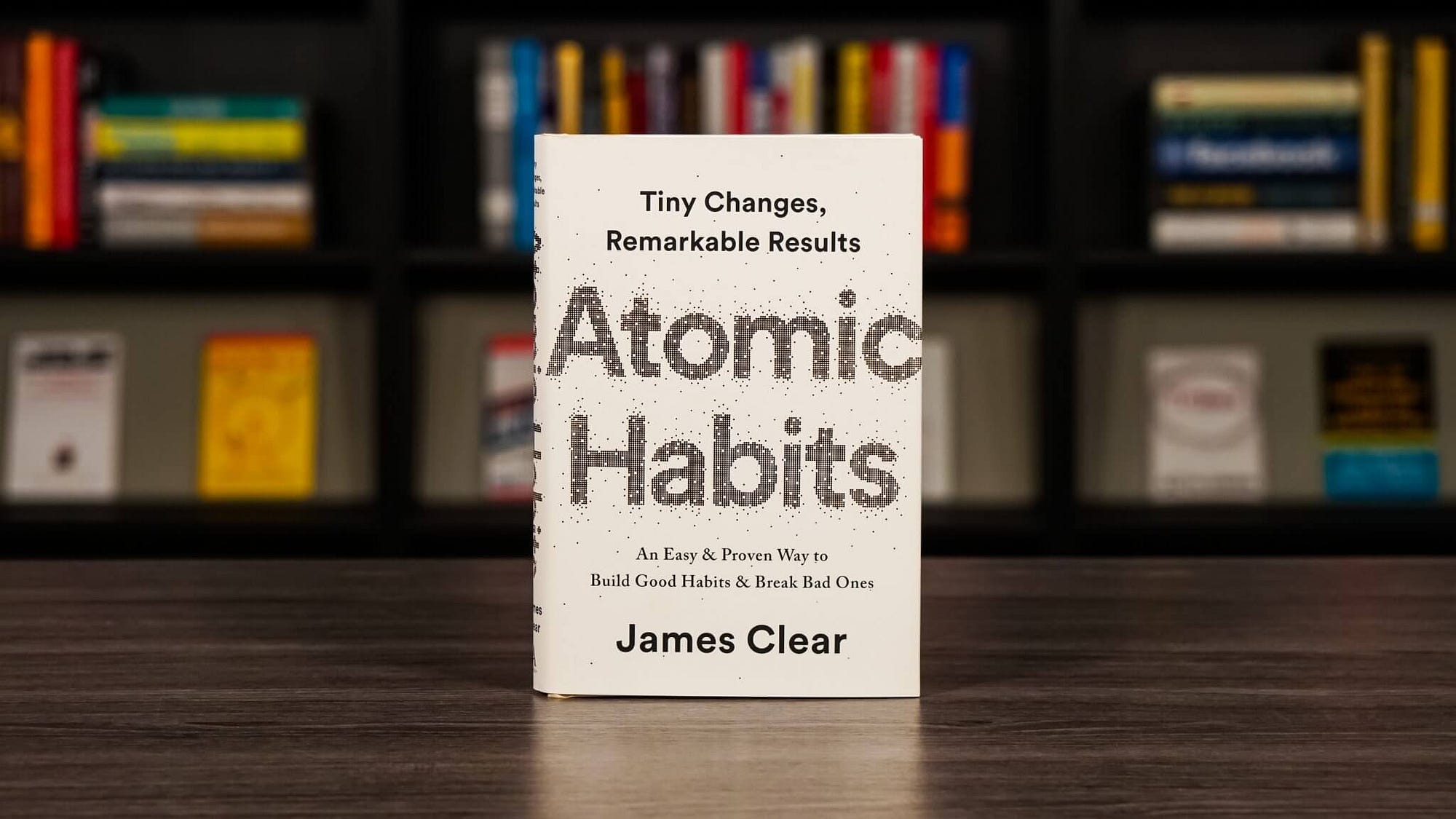
This is easily one of the best and most useful books I ever read. The beauty of it is that it could well be summarized in one sentence: Be patient, start small, and acknowledge that all big things come from small things. That's it. No more.

How to Create a Atomic Habit
The book is one big collection of very useful tips and tricks on how to set yourself for success in establishing your new wanted habits and breaking old bad ones through what James Clear, the author, defines as the 4 laws of habit forming.
Ensure that the new habit you are trying to build is:
- Obvious: The definition of "Out of sight, out of mind". Ensure that cues for that new habit are visible to you all the time.
- Attractive: Find a way to make that habit appealing and fun to do.
- Easy: Start super small. Establish the habit first and then optimize it.
- Satisfying: Find a way to make the new habit immediately rewarding. Example: You are trying to build the habit of saving, each time you pass on a frivolous purchase, put the same amount into a savings account.
For breaking bad habits, invert the previous rules. Make bad habits: Invisible, unattractive, difficult, and unsatisfying.
Your "Claimed" Identity Dictates Your Actions
This is one of the most valuable and practical ideas presented in the book. More often than not, we resist changes and, in some cases, don't even try to change our behavior because of some conceived identity we attach to ourselves. I am not a morning person, I am always late, I am horrible at math, I am not an organized person, and so on.
The author argues here that the first step to changing your behavior is by detaching yourself from these preoccupations and to adopt a new identity. Afterwards, you need to start doing small changes towards this new identity to reinforce it. With enough actions in this direction you will have a history of changes and habits that proves your new identity. In essence, an identity forms based on the actions we do in a consistent and continuous way. If you tend to show up late for your appointments, your conscious and subconscious will believe that you are an "always late" person. And if you do the opposite of that for a while, your self-perception will change as well.
Your Environment Controls You
This notion was also brilliant. The idea here is that motivation for habits you want to initiate and self-restraint against habits you want to break doesn't work in the long run. Motivation always wears out after some time, and self-restraint is very hard to maintain if you keep exposing yourself to tempting situations. So what to do instead?
Set up the spaces where you live and work in a way that increases your exposure to positive cues and reduces your exposure to negative ones.
- If you want to drink more water, ensure there is always a filled bottle on your desk.
- If you want to read more, ensure there is a book by your bedside and keep your phone in a different room.
- If you want to watch less TV, remove the comfy couch in front of the TV.
- If you want to have better separation from work and life, don't put the office in the room you sleep in.
So try to design, or redesign, your environment where possible to make the habits you want to have the natural thing and the bad habits you want to break have the most friction possible.
Think in Systems Not Goals
Here again, and against the prevailing wisdom, the author argues — and I agree — goals don't work. Why you might ask?
- The Happiness Gap: Goals create a mental gap between where you are and where you want to be. This programs your brain to think, "I'll be happy when I achieve this," making you always anxious and always chasing and waiting for the goal to be achieved.
- The "Yo-Yo" Effect: Achieving a goal gives you an undeniable hit of dopamine, but afterwards? Unless you are very committed and structured and have the next goal set up, you will probably go back to the same state before you took on that goal. I always got this with diet goals.
- Winners and Losers Have the Same Goals: Self-explanatory.
Instead, one should think in systems. A system is a concrete part of your identity that make you do things because this is what you are, not because of some temporary goal you are currently chasing.
- The goal is not to read a book, the goal is to become a Reader.
- The goal is not to run a marathon, the goal is to become a Runner.
- The goal is not to learn about that new thing, the goal is to become a Learner.
Always Be Reviewing, Always Be Adjusting
No one is perfect, no one will ever be. The journey to your best self ends only when you are dead. New habits we fight and suffer to build today based on our expectations of what we need to be will need to be broken next year based on our new expectations then.
Only those with the smallest identity possible, will be able to have the greatest self-awareness the let them always be reflecting and improving.
The author cites this beautiful poem by an ancient Chinese philosopher Lao Tzu:
Men are born soft and supple;
dead, they are stiff and hard.
Plants are born tender and pliant;
dead, they are brittle and dry.
Thus whoever is stiff and inflexible is a disciple of death.
Whoever is soft and yielding is a disciple of life.
The hard and stiff will be broken.
The soft and supple will prevail.